
Navigating the world of Open Educational Resources (OER) can feel like a lot of moving parts. Whether you’re trying to find a free PDF, wondering if you can listen to Biology while you’re at the gym, or trying to understand how our official partnership with OpenStax works, we’ve got you covered.
Jump to a section:
About OpenStax | How Audileo Works | Study Tips & Accessibility
1. The OpenStax Basics: Free & Legit
Before we get into the audio, let’s talk about the source. OpenStax is a nonprofit initiative out of Rice University. They’re the “gold standard” of free, peer-reviewed textbooks used by thousands of universities and colleges worldwide.
Is OpenStax free?
Yes. All OpenStax textbooks are free to read online and to download as PDF’s. Optional print editions are offered at low cost. Audileo’s audio versions have free and paid options.
How Does OpenStax Work?
OpenStax collaborates with educators to develop textbooks aligned to standard curricula. Students and instructors can access or download these resources anytime without a login.
Does OpenStax have an app?
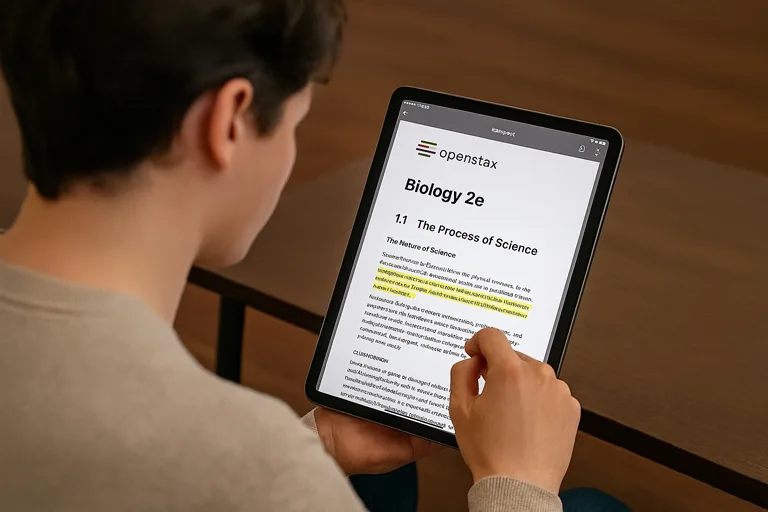
Yes. The OpenStax Reader app lets you read, highlight, and take notes offline on iOS and Android devices.
Does OpenStax Have Audio?
OpenStax textbooks are available as audiobooks through Audileo, an official technology partner. Stream directly or download via platforms like Spotify, Hoopla, Audiobooks.com, and many more.
Can OpenStax Read to You?
Yes. Use built-in screen readers (VoiceOver on iOS, TalkBack on Android), or access narrated versions via Audileo.
How to Get OpenStax to Read to You?
- Enable your device’s text-to-speech (TTS) feature in the online reader
- Stream or download OpenStax audiobooks from Audileo
- Access DAISY audio through Bookshare if you qualify
How to Use OpenStax?
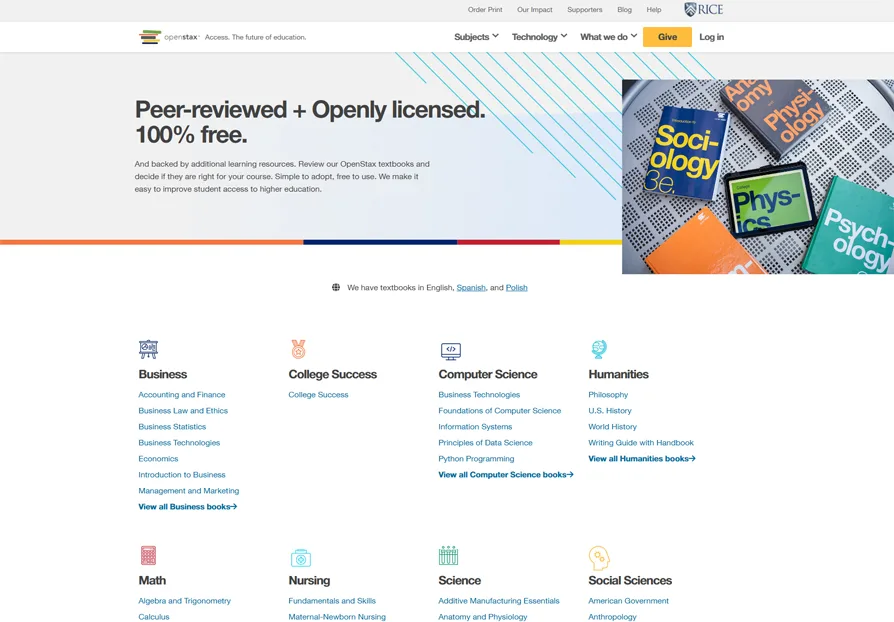
- Visit openstax.org
- Select your subject and textbook
- Choose “View Online,” “Download a PDF,” or “Listen” via Audileo
- Create a free account to save highlights and notes
How to Cite OpenStax?
Each textbook includes a “Citation/Attribution” tab with formatted APA, MLA, and Chicago references. You can also copy citations directly into citation-generator tools.
How to Highlight on OpenStax?
- Sign in with a free OpenStax account
- Highlight and annotate in the online reader on desktop
- View and filter your highlights on mobile and tablet
How to Highlight on OpenStax on iPad?
Mobile apps support highlight viewing and note review. To create or edit highlights, use the desktop web reader.
Who Owns OpenStax?
OpenStax is owned and managed by Rice University as a nonprofit educational publisher.
Is OpenStax a Publisher?
Yes. OpenStax is a nonprofit publisher of open educational resources (OER), creating textbooks and ancillary learning tools.
Is OpenStax Legit, Good, and Reliable?
Absolutely. OpenStax is backed by Rice University and philanthropic foundations. Textbooks undergo peer review, align with course standards, and are used at thousands of institutions worldwide.
Are Free OpenStax Textbooks Good?
Yes. Educators praise them for clarity, quality, and affordability. They meet academic requirements and enhance learning outcomes.
Is OpenStax Safe?
Yes. The platform is secure, nonprofit-driven, and free of hidden fees or intrusive data collection.
How to Download an OpenStax Textbook?
- Go to openstax.org
- Select your textbook
- Click “Download a PDF” or “View Online”
- Optionally, order a low-cost print copy or get the audio textbook from Audileo
Are OpenStax Textbooks Free?
Yes. All digital versions – HTML and PDF – are free. Audio and print versions may incur a low manufacturing fee.
2. Audileo: Your Textbook, but Audible
So, where does Audileo fit in? Audileo transforms those OpenStax texts into high-quality audiobooks so you can study without being tethered to a screen.
What are audio textbooks?
Audio textbooks are digital audio versions of traditional academic textbooks. Audileo offers high-quality audio textbooks for a variety of university and college subjects. They let students listen to course material, providing a flexible and accessible way to engage with educational content beyond reading.
How do audio textbooks work on Audileo?
Audileo provides a smooth experience for accessing audio textbooks. Students are encouraged to search Libby/OverDrive for a free audiobook copy. Alternatively, our audiobooks are also available on Spotify, Audiobooks.com, Kobo, Nook, and other audiobook platforms for a fee.
Students can stream or download these audio textbooks to their smartphones and tablets, making it easy to listen on the go. Features often include adjustable playback speed and chapter navigation.
What are the main benefits of using audio textbooks?
Audio textbooks offer several benefits, including:
- Multitasking Capability: Learn while doing other tasks.
- Flexibility and Convenience: Listen anywhere, anytime—during commutes, workouts, or chores.
- Improved Comprehension: Many students find that listening helps them understand and remember information, especially for complex topics.
- Enhanced Accessibility: Great for students with learning disabilities (like dyslexia, ADHD), visual impairments, or those who learn better through auditory means.
- Reduced Eye Strain: They provide a screen-free learning option, beneficial for long study sessions.
Are audio textbooks as effective as traditional print textbooks for learning?
Yes, for many students, audio textbooks can be just as effective, or even more so, than traditional print textbooks. Research shows that listening engages different parts of the brain, aiding comprehension and memory retention. Audileo’s audio textbooks deliver the same core content as their print versions, often with professional narration to improve the learning experience.
Can audio textbooks help students with dyslexia or other learning disabilities?
Absolutely. Audio textbooks are a significant help for students with dyslexia, visual impairments, ADHD, or other learning disabilities. They provide a way to access academic content that reduces reading barriers and supports inclusive learning. Audileo is dedicated to offering accessible learning solutions.
How can I find specific audio textbooks for my courses on Audileo?
Audileo has a wide catalog of audio textbooks. You can check out their full audiobook bookshelf to find the exact audio textbook you need for your university or college courses. We regularly update our library to cover various academic subjects.
Are Audileo’s audio textbooks human-narrated or AI-generated?
At Audileo, we prioritize high-quality learning experiences. Our audio textbooks feature professional AI-narration, proofread by humans, ensuring clarity, proper pronunciation, and an engaging listening experience that improves understanding and retention.
How much do audio textbooks cost on Audileo compared to print textbooks?
The cost of audio textbooks on Audileo varies based on the title and format (purchase or subscription). You may find them for free on Libby/OverDrive with your school’s library card. Spotify subscriptions include 15 hours of audiobook listening time per month. Often, audio textbooks are a more affordable option than new print textbooks.
How do I effectively study with audio textbooks?
To get the most out of audio textbooks:
- Active Listening: Engage with the material by focusing and avoiding distractions.
- Adjust Speed: Find a playback speed that allows for good comprehension without being too slow or fast.
- Take Notes: Pause and write down key points or questions as you listen.
- Review: Re-listen to complex sections or chapters.
- Combine with Other Methods: Use audio textbooks to support your print reading or study guides.
Are audio textbooks available for all academic subjects?
Audileo focuses on turning OpenStax textbooks into high-quality audiobooks. Our growing library features subjects like American Government, Anatomy & Physiology, Astronomy, Biology, Business, Economics, Marketing, Psychology, Sociology, U.S. History, and many others. We continually expand our collection to cover various college and university disciplines. Follow us on social media to be the first to know about new audiobook releases and updates.
Can I download audio textbooks for offline listening?
That depends on the platform on which you accessed the audiobook. Most platforms support offline listening. This feature is especially helpful for students with limited internet access or those who prefer to study without needing a constant connection.
How does Audileo ensure the quality of its audio textbooks?
Audileo is committed to delivering high-quality audio textbooks that meet rigorous academic standards. Each audiobook is carefully reviewed to ensure clear narration, accurate content, and a consistent listening experience. We also update our titles regularly to reflect the latest versions from OpenStax. However, occasional errors can happen, and we value your feedback. If you notice any issues, please let us know through our contact form.
Are there free trial options available for Audileo?
We provide full, free audiobook access to verified educators. Just reach out to us using your official school email. For all listeners, Spotify offers free samples of each title. This lets you preview the narration and quality before making a purchase. Currently, we do not offer separate trial versions.
Can faculty recommend Audileo audio textbooks to their students and libraries?
Yes, Audileo values faculty who share our service with their students. We also appreciate when educators encourage their school libraries to add our audiobooks to Libby/OverDrive. This helps make sure that all students, including those who may not be able to afford them otherwise, can access these valuable learning resources for free.
What if an audio textbook I need isn’t available on Audileo?
If a specific audio textbook you need isn’t in our catalog yet, you can contact Audileo’s support team. We value user feedback and will look into the possibility of adding new titles based on demand and availability from publishers.
Is Audileo an official OpenStax Technology Partner?
Yes, Audileo is proud to be an official OpenStax Technology Partner. This partnership lets us offer high-quality audio versions of OpenStax’s widely used open educational resources (OER) textbooks, making valuable academic content more accessible to students.
3. Study Tips & Accessibility
Audiobooks aren’t just about “convenience”. For many, they are a necessity for academic success.
Can audio textbooks help with dyslexia or ADHD?
This is our core mission. For neurodiverse students, traditional dense text can be a massive barrier. Audio reduces that friction, allowing you to absorb complex material without the mental exhaustion of decoding text.
What is “Bimodal Learning”?
It sounds fancy, but it’s simple: it’s the act of listening to the audio while following along with the text. Using two “channels” (eyes and ears) can improve your retention by up to 40%. It’s the ultimate hack for mastering subjects like Anatomy & Physiology or Macroeconomics.
How do I cite an OpenStax audiobook?
Every textbook on the OpenStax site has an “Attribution” tab. When citing the audio version, just follow your standard style guide (APA, MLA, Chicago) for audiobooks, referencing Audileo as the narrator/provider.
What if the book I need isn’t available yet?
We are constantly expanding. If your specific OpenStax title isn’t in our library yet, reach out to us here. We prioritize new releases based on what students and faculty are asking for.
How do audio textbooks support Universal Design for Learning (UDL)?
UDL is all about providing “multiple means of representation.” Not every brain processes black ink on a white screen effectively. By offering accessible OpenStax audiobooks, we provide a flexible alternative that caters to auditory learners and those who struggle with traditional literacy. It’s about removing the “one-size-fits-all” approach to higher education and giving students the agency to choose how they consume complex information.
Is listening to a textbook as effective as reading it?
The short answer? Yes. Cognitive science shows that for most students, auditory comprehension is just as robust as reading comprehension once you get past the initial learning curve. In fact, for subjects with dense terminology—like Anatomy & Physiology or Business Ethics—hearing the correct pronunciation of terms while you study can actually improve your “mental map” of the subject. It’s not “cheating”; it’s optimizing your brain’s bandwidth.
Can I use Audileo audiobooks for ADA compliance in the classroom?
Absolutely. Many campus Disability Resource Centers (DRC) recommend our narrated textbooks as a supplemental resource for students with documented print disabilities. Because we are an official OpenStax Technology Partner, our audio aligns perfectly with the OER versions used in class, making it a reliable tool for meeting ADA (Americans with Disabilities Act) goals and ensuring a more inclusive classroom environment.
How does audio help with “Screen Fatigue” and “Digital Burnout”?
Let’s be real: between Zoom lectures, online assignments, and social media, the average college student is staring at a screen for 8+ hours a day. This leads to digital eye strain and cognitive burnout. Audio textbooks allow you to “unplug” without falling behind on your syllabus. You can close your eyes, rest your optic nerves, and keep your study session going. It’s the healthiest way to tackle a heavy reading load.
Why is “Active Listening” better than “Passive Reading”?
We’ve all had that moment where we “read” five pages of a textbook only to realize we didn’t absorb a single word. That’s passive reading. Active listening with an audiobook—especially when you’re pacing, commuting, or using a “fidget” activity—can actually keep your brain more alert. It forces you to process the narrative flow of the information, making it easier to summarize the main points later.
Still have a question?
If we didn’t cover it here, don’t hesitate to ask.
Faculty: We offer full, free access to verified educators. Contact us with your school email.
Students: Try our [AI Textbook Chatbot] for specific questions about your course material.